The Mother of Harlots, 2003, performance / Matka neviestok, 2003, performancia
Edited documentation of the performance (original duration 45 min., Sausalito, 2003) / Výber zo záznamu performancie (pôvodná dĺžka 45 min., Sausalito, 2003)
Edited video projection used in the performance (original duration 15 min.) / Výber z videoprojekcie použitej v performancii (pôvodná dĺžka 15 min.)
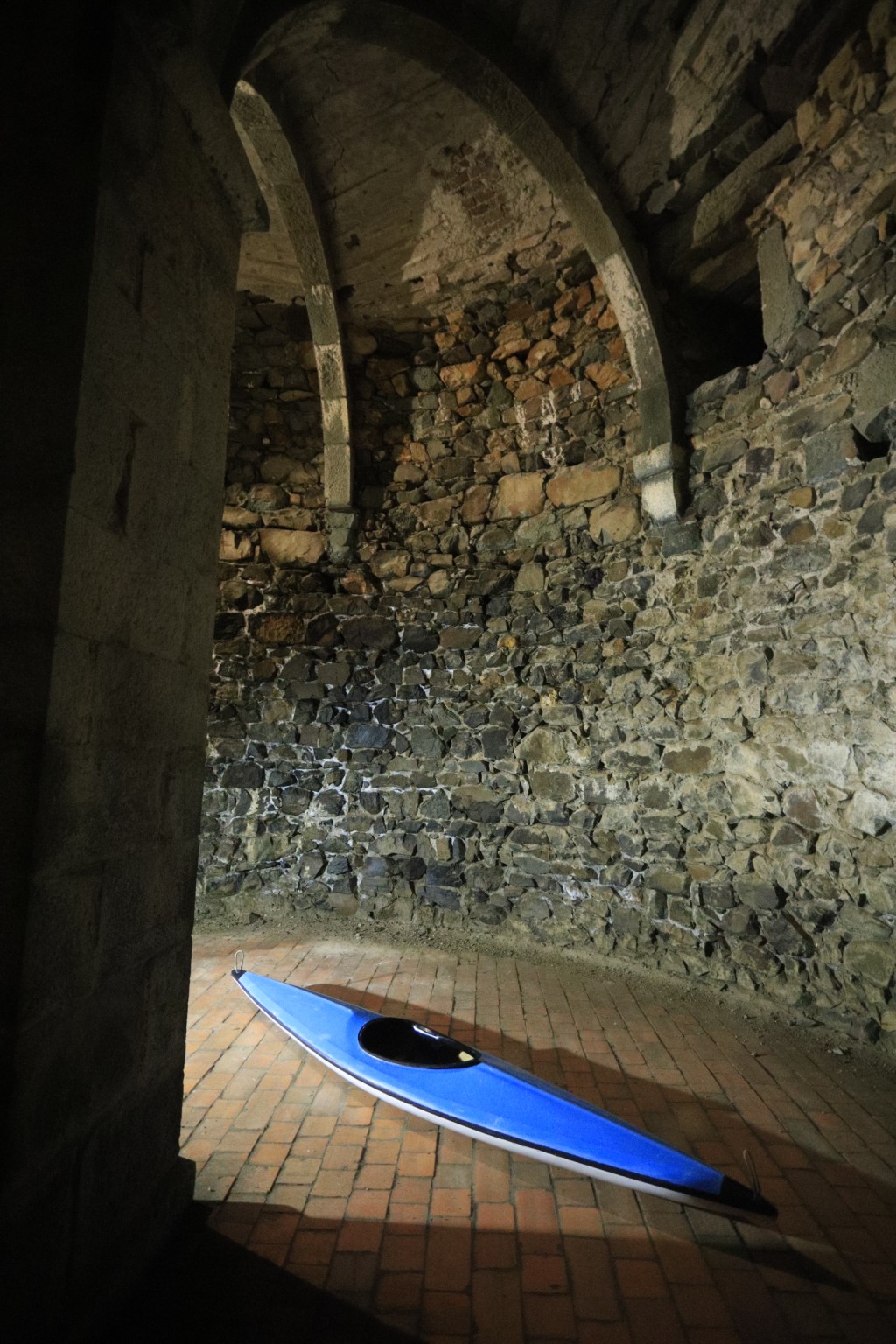
Documentation of the installation featuring artifacts from the performance, created for the Open House at Headlands Center for the Arts / Dokumentácia inštalácie z artefaktov použitých v performancii, vytvorená pri príležitosti dňa otvorených dverí v Headlands Center for the Arts
English version
Created during a residency at the Headlands Center for the Arts in Sausalito, California, this performance explores the mechanisms of social exclusion and the profound isolation resulting from the systemic neglect of specific minorities.
The conceptual core of the work lies in the tension between dogmatic religious texts and intimate personal confession. Segregational passages from the Old Testament and apocalyptic visions from the Book of Revelation are confronted with the artist’s own texts, loosely inspired by St. Augustine’s Confessions. The performance space is defined by a ritualized act of identity transformation within the acoustic atmosphere of a cathedral.
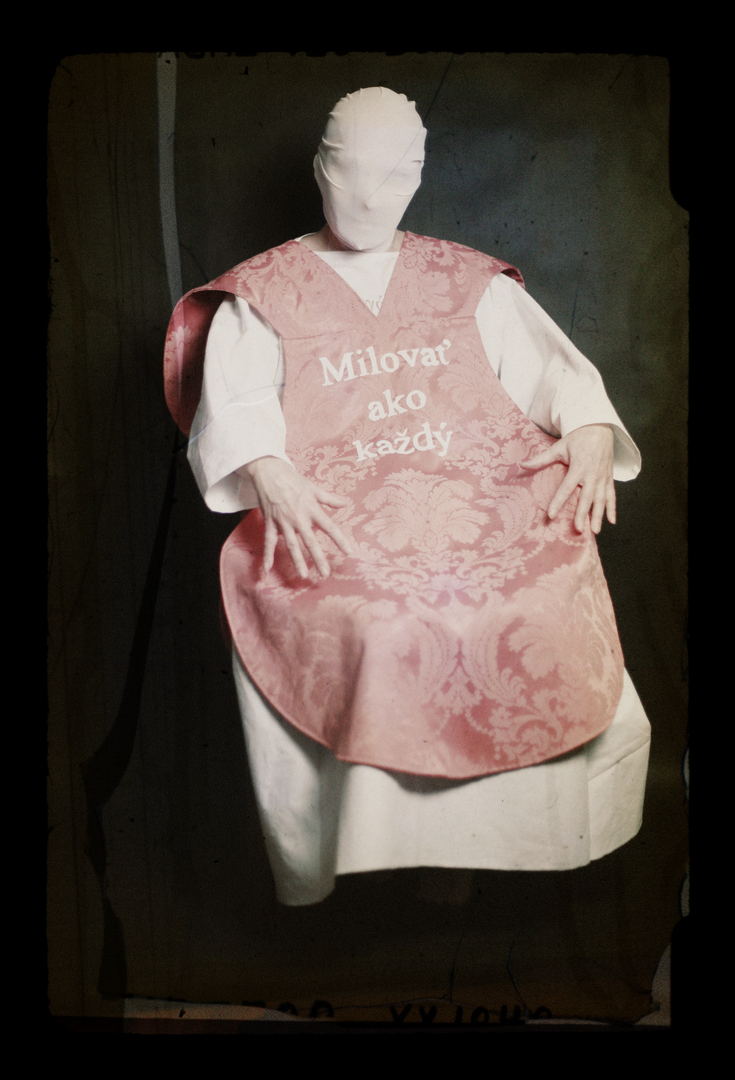
The pivotal moment of the piece is the transformation from an Old Testament preacher into the figure of the Babylonian Harlot. The Latin formula Ego volo conficere Corpus et Sanguinem functions as a catalyst for the physical manifestation of “otherness.” The tearing of the white habit to reveal a red costume references the Harlot of Babylon (Vatican/Rome), while on another level, the work articulates the theme of gender transgression and solidarity with LGBTQ+ communities.
The application of blood to the face—symbolizing blood shed by the Church—is a radical demand for a redefinition of the Church’s role in the modern world. Ultimately, the work evolves into a reconciliatory appeal for compassion and an understanding of human difference.
slovenská verzia
Dielo vzniklo počas rezidenčného pobytu v Headlands Center for the Arts v Sausalite v Kalifornii. Performancia tematizuje mechanizmy sociálnej exklúzie a stav hlbokej izolácie, ktorá vzniká ako dôsledok systémového prehliadania potrieb špecifických menšín.
Konceptuálne jadro diela tvorí napätie medzi dogmatickým náboženským textom a intímnou autorskou spoveďou. Segregačné pasáže Starého zákona a apokalyptické vízie Zjavenia svätého Jána sú konfrontované s textami voľne inšpirovanými Vyznaniami svätého Augustína. Performatívny priestor definuje rituálny akt premeny identity v akustickej atmosfére katedrály.
Kľúčovým momentom je transformácia postavy starozákonného kazateľa do figúry Babylonskej neviestky. Latinská formula Ego volo conficere Corpus et Sanguinem tu slúži ako spúšťač telesnej manifestácie inakosti. Roztrhnutie bieleho habitu a odhalenie červeného kostýmu odkazuje na Babylonskú neviestku (Vatikán/Rím), no v ďalšej rovine dielo artikuluje tému transgresie rodu a solidarity s LGBTQ+ komunitami.
Aplikácia krvi na tvár – ako symbolu krvi preliatej cirkvou – je radikálnou výzvou na prehodnotenie úlohy cirkevnej inštitúcie v modernom svete. Dielo sa v závere mení na zmierlivý apel na súcit a pochopenie ľudskej inakosti.






 Maroš Rovňák, multidisciplinary artist / multidisciplinárny umelec