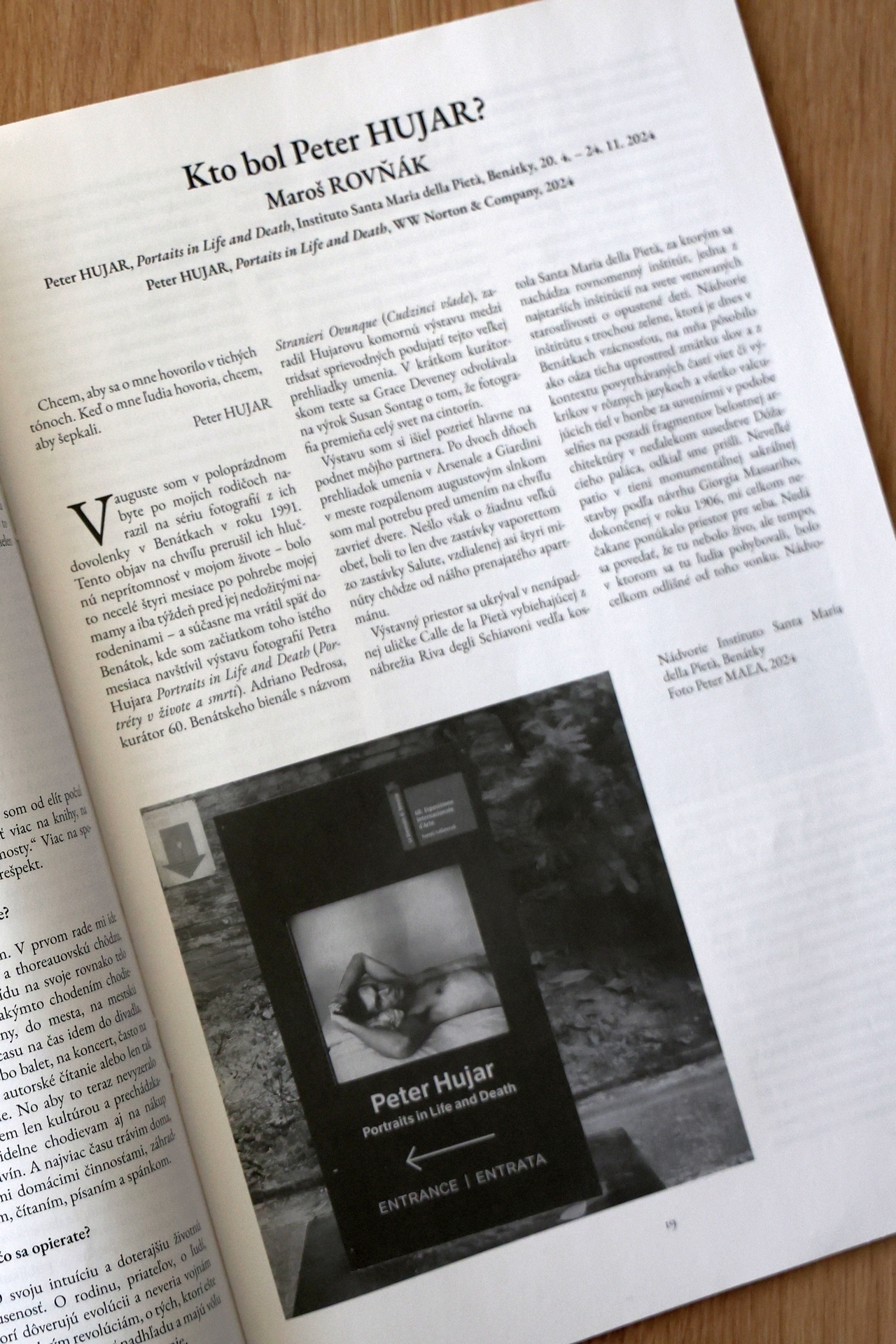
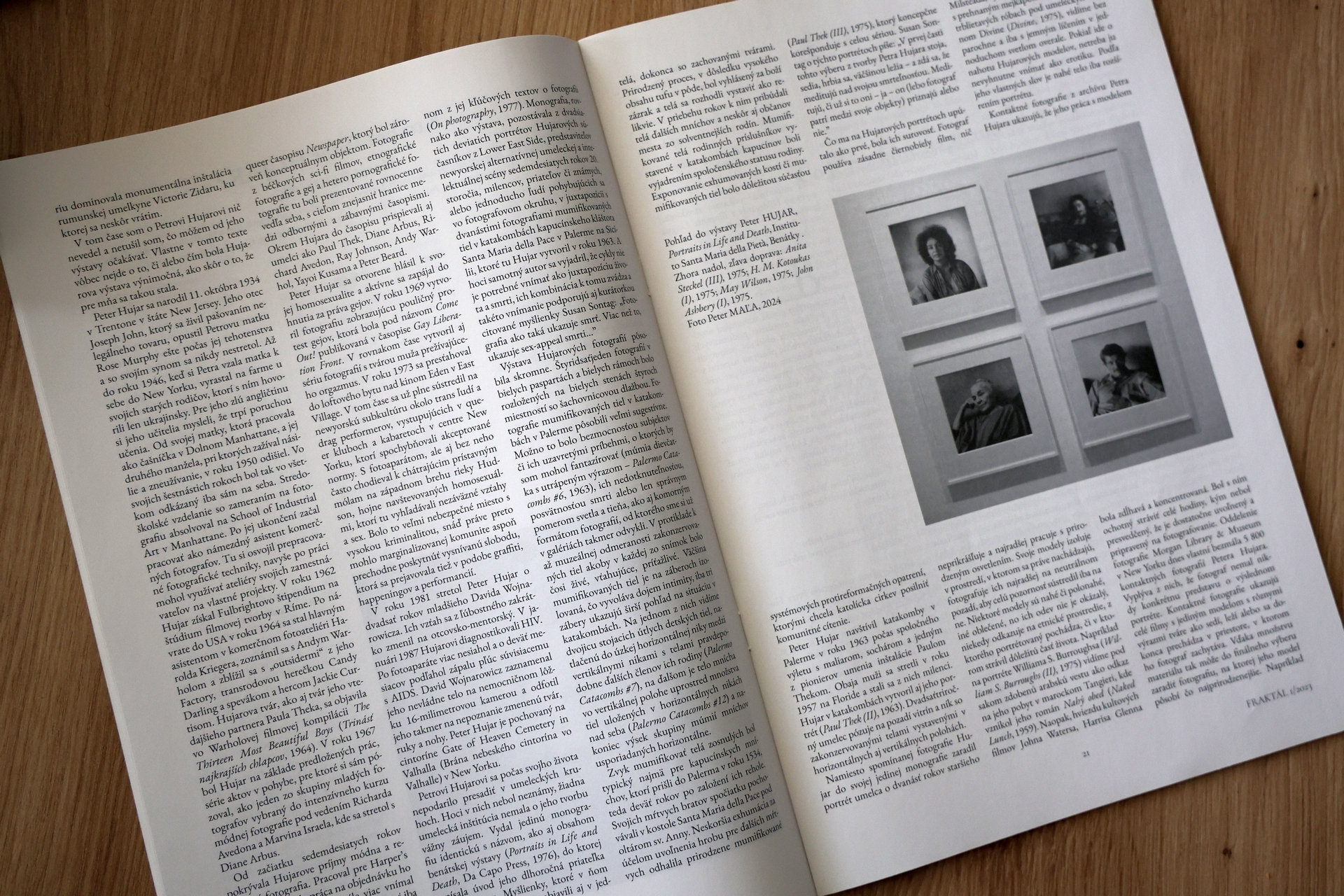
This personal narrative and critical reflection explores the artistic legacy and enduring resonance of American photographer Peter Hujar through the lens of a personal encounter with his exhibition Portraits in Life and Death, presented as a collateral event of the 60th Venice Biennale at the Istituto Santa Maria della Pietà. Interweaving private grief, memory, and geographic displacement following the loss of the author’s mother, the essay examines Hujar’s quiet, unvarnished portraiture of New York’s 1970s downtown LGBTQIA+ subculture alongside his 1963 series of mummified remains in the Capuchin catacombs of Palermo. By critically re-evaluating Susan Sontag’s original 1976 introductory essay, the text situates Hujar’s practice within the socio-political struggles of queer liberation, the devastating impact of the 1980s AIDS crisis, and his historic marginalization relative to contemporaries such as Diane Arbus and Robert Mapplethorpe. Ultimately, the essay frames Hujar’s intimate medium as a sacred, melancholic space of presence and transience, bridged by dialogue with contemporary installation art and literary epitaphs.
Táto osobná reflexia a kritická štúdia skúma umelecký odkaz a nadčasový rezonančný potenciál amerického fotografa Petra Hujara cez optiku osobného stretnutia s jeho výstavou Portraits in Life and Death, prezentovanou ako sprievodné podujatie 60. ročníka benátskeho bienále v inštitúte Santa Maria della Pietà. Text prepojením súkromnej smútočnej skúsenosti, pamäti a geografického presunu po strate matky analyzuje Hujarove tiché, neidealizované portréty newyorskej undergroundovej queer subkultúry 70. rokov 20. storočia a paralelne ich konfrontuje s jeho mrazivou sériou mumifikovaných pozostatkov v kapucínskych katakombách v Palerme. Prostredníctvom kritickej reevaluácie pôvodného úvodného textu Susan Sontagovej z roku 1976 autor situuje Hujarovu tvorbu do kontextu sociálno-politických bojov za emancipáciu, ničivého dopadu krízy AIDS v 80. rokoch a jeho historickej marginalizácie v tieni vrstovníkov ako Diane Arbusová či Robert Mapplethorpe. Esej uzatvára rámcovanie Hujarovho komorného média ako posvätného, melancholického priestoru prítomnosti a pominuteľnosti, ktorý je sprostredkovaný dialógom so súčasnou inštaláciou a literárnymi epitafmi.